From the Biology Classroom to The Understanding Project
The Understanding Project began in a biology classroom.
Not as a book. Not as a website. Not even as something I knew would eventually become a project.
It began as a question I kept encountering as a science educator: What if biology could help students understand more than the material on the test? What if it could help them understand themselves?
I became a teacher because I believed science could be made human, memorable, and useful. I loved biology, but I was never interested in teaching it as a list of vocabulary words disconnected from the lives of the people learning them.
The systems we studied were not abstract. My students were living inside them every day.
Stress affected their attention. Sleep affected their memory. Hunger affected their energy. Relationships affected whether they felt safe enough to participate. Their environments shaped how they learned, trusted, reacted, connected, and imagined their futures.
The science was happening in real time, in every body in the room.
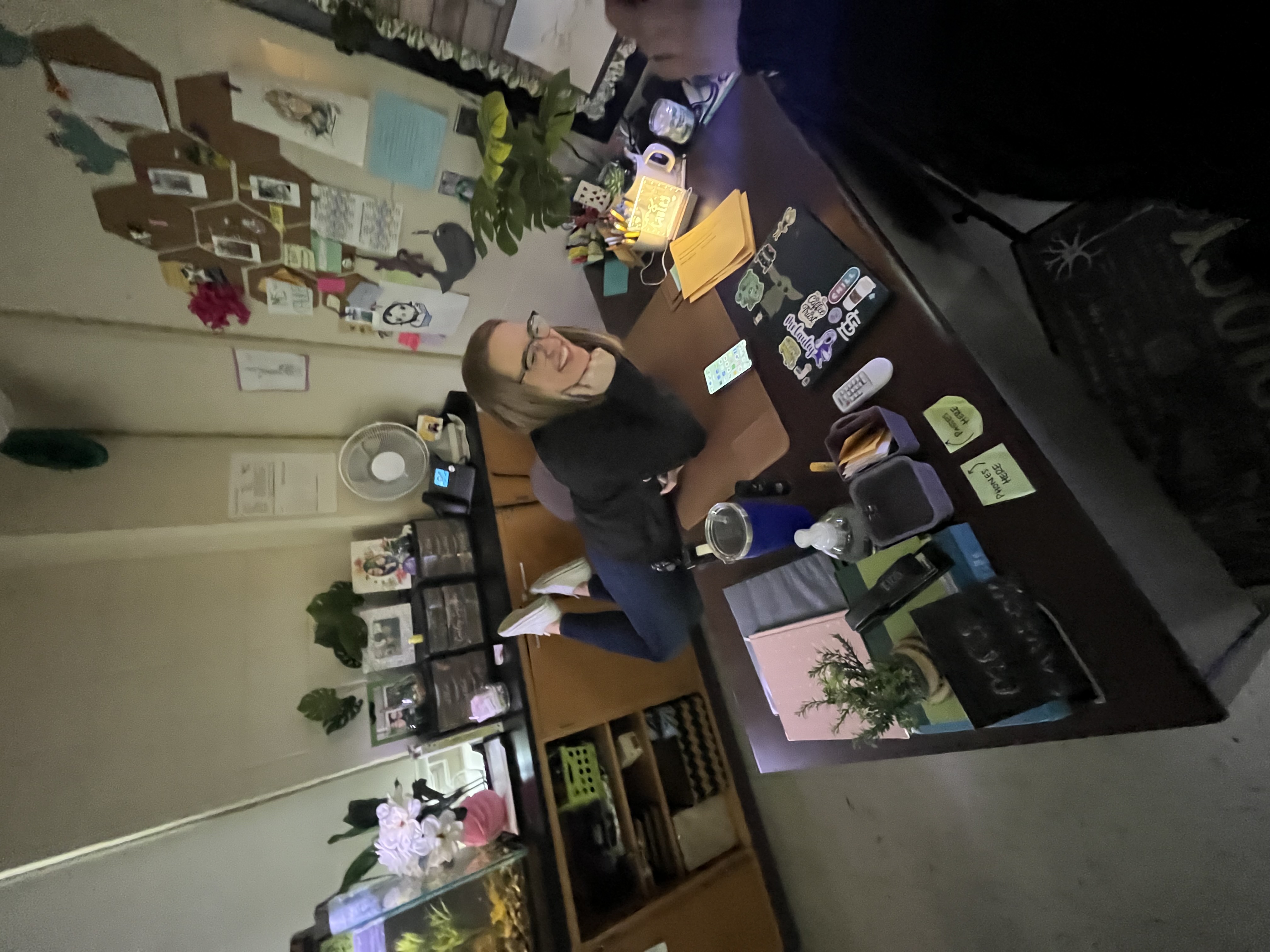
I am still a teacher—just to a different audience.
This is the classroom where my students helped me learn which questions were worth asking.Looking beyond the labels
As I built relationships with my students, I began noticing how often the language used to describe them stopped at the surface.
Unmotivated. Defiant. Difficult. Disrespectful. Behind. At risk.
Those labels named what someone could observe, but they did not explain it.
When I looked more closely, I often saw something different. I saw exhaustion beneath disengagement. Fear beneath avoidance. Hypervigilance beneath attitude. I saw students whose bodies and brains were responding to stress, instability, loss, hunger, disrupted sleep, or experiences the classroom could not see.
Their behavior was not meaningless. It was information.
That did not mean every behavior was acceptable or that expectations no longer mattered. It meant that an explanation gave us a more useful place to begin than judgment.
Labels describe what we see. Understanding asks us to look for what shaped it.
My research into trauma and development
While teaching full time, I completed my master’s degree. My research focused on trauma-informed practices and developmental neuroscience, particularly how chronic stress and a child’s environment can influence the developing brain, nervous system, behavior, and capacity to learn.
The research gave scientific language to patterns educators witness every day.
A brain prioritizing safety may have less capacity available for sustained attention. A nervous system expecting threat may interpret correction differently from one that feels secure. A student who appears checked out may be protecting themselves through withdrawal or shutdown. A student who cannot sit still may not need more shame; they may need movement, predictability, connection, or a different path into the lesson.
Trauma-informed education is sometimes misunderstood as lowering standards or excusing behavior. That was never what the work meant to me.
It meant understanding the conditions under which learning becomes biologically possible—and then building classrooms that create more of those conditions.
Biology as a language for real life
I began building lessons, activities, stories, diagrams, case studies, and explanations that connected biology to ordinary human experience.
Homeostasis became a way to talk about balance and limits. The stress response became a way to understand why the body can remain mobilized after danger has passed. The nervous system became a way to discuss safety, connection, and regulation. Adaptation became a way to look at patterns without immediately turning them into personal defects.
Biology could become more than content.
It could become language.
It could give a student a way to say, “There is a reason this feels difficult,” without concluding, “There is something wrong with me.”
That distinction became the foundation of everything that followed:
You are not broken. You have been shaped. There is a difference.
Why the project became larger than a classroom
The more I studied and taught, the more I realized these explanations were not only useful for students.
Adults carry adaptations too. Families repeat patterns they do not understand. Workplaces reward people for overriding their limits. Communities respond to behavior without asking what produced it. People move through relationships, health challenges, grief, conflict, and change without a shared language for how experience shapes the body and how the body shapes experience.
The same questions kept appearing at every scale:
Why do we feel what we feel? Why do we repeat what we repeat? Why can a response that once protected us become costly later? How do our bodies, relationships, histories, and environments influence the people we become? And what becomes possible when those patterns finally make sense?
The Understanding Project grew from those questions.
What I hope to build
My goal is to create a place where complex knowledge becomes understandable without being stripped of its depth.
The journal will hold stories and observations from classrooms, daily life, and the continuing development of the project. The articles will hold the science, research, historical context, definitions, and sources for readers who want to go deeper. The books will bring the larger framework together when they are ready.
Stories, observations, and questions from the work as it unfolds.
Science, research, history, definitions, and sources for going deeper.
The larger framework, brought together when the full work is ready.
This project will begin with biology, trauma, development, relationships, and the nervous system, because that is where my own work began. Over time, it will also explore the environments and systems around us, the patterns found in nature, and the different forms of knowledge people have used to understand what it means to be human.
I am not interested in offering one label that explains everyone or one prescribed path people are expected to follow.
I want to offer better questions, accessible knowledge, and enough context for people to arrive at their own understanding.
Because understanding does not remove responsibility. It gives responsibility somewhere useful to begin.
When we know better, we can do better, so we can be better.
That was the idea at the center of my classroom.
It is now the idea at the center of this project.
A private place to respond
Share an anonymous reflection.
No name or email is requested. Your response is received privately and will never appear publicly without your separate permission below.